Player Retention Through Layered Achievement Milestones in Chip-Driven Mobile Slot Ecosystems
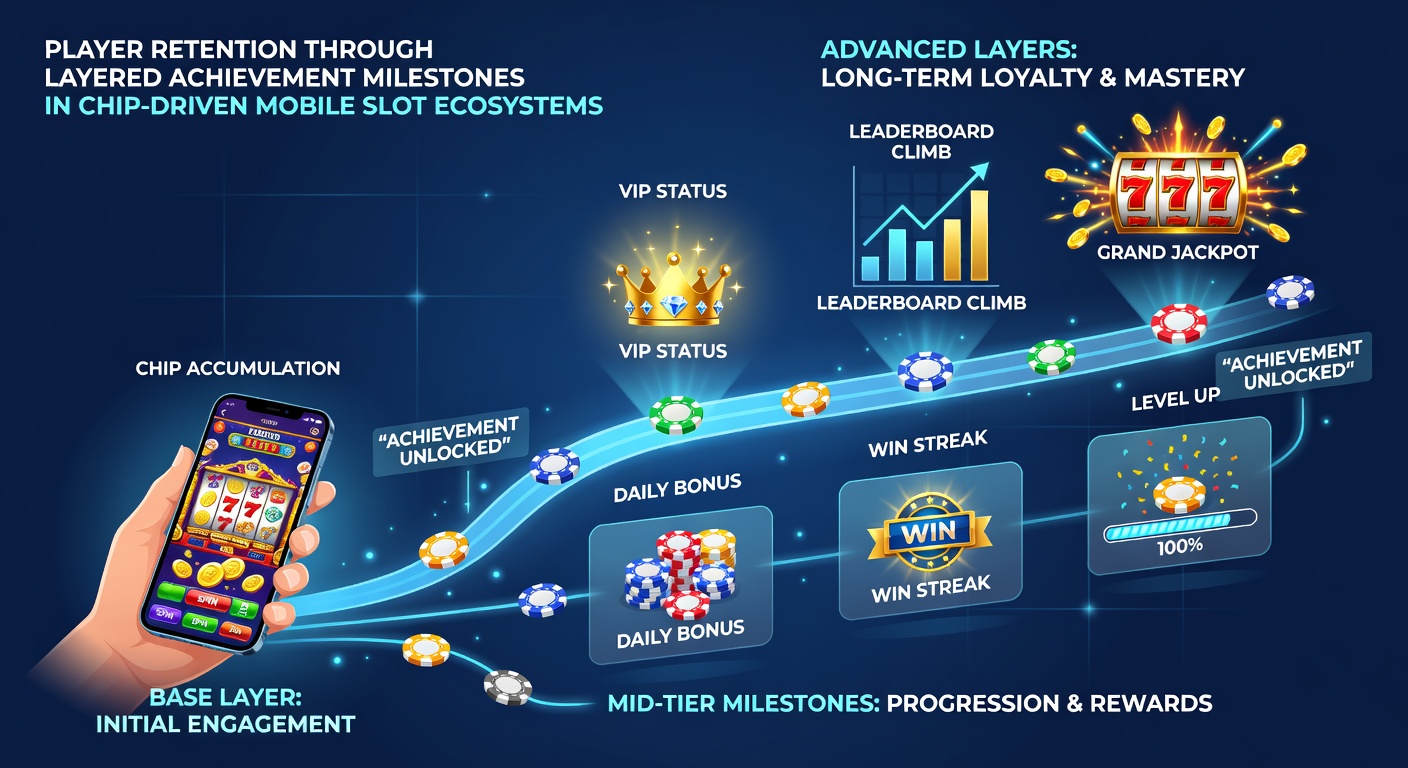
 Mobile slot applications built around virtual chip economies rely on structured milestone systems to maintain user engagement across extended periods. These platforms organize achievements into progressive layers that unlock additional features, bonus rounds, and chip rewards as players advance through defined thresholds. Data from industry tracking services shows that users who complete initial milestone sets tend to extend session lengths by noticeable margins compared with those who encounter flat progression curves. Developers implement these layers through a combination of daily login streaks, spin volume targets, and collection objectives tied directly to chip expenditures. Each successive tier introduces new visual indicators and reward multipliers that scale with player investment, creating a continuous feedback loop between activity and recognition. Observers note that chip-driven mechanics allow precise calibration of reward frequency because virtual currency removes real-world financial barriers that might otherwise interrupt play patterns.
Mechanics of Layered Milestone Design
Layered systems typically divide achievements into entry-level, intermediate, and advanced categories, each containing multiple sub-objectives that feed into the next stage. Entry-level milestones often focus on basic actions such as completing a set number of spins or reaching a modest chip balance, while intermediate layers introduce collection elements like symbol gathering or mini-game completions. Advanced tiers then incorporate competitive elements such as leaderboard placements or time-limited challenges that require accumulated progress from prior layers.
Chip economies support these structures by serving as both currency for continued play and as quantifiable progress markers. When players exchange chips for spins, the system records those transactions toward milestone completion, and successful milestone achievements return chips plus additional incentives. This dual function keeps the economy circulating without requiring external purchases in many cases, though optional top-up options remain available for users seeking faster advancement.
Retention Patterns Across User Segments
Research conducted by the Canadian Centre on Substance Use and Addiction indicates that mobile gambling simulations with milestone progression retain users at higher rates during the first thirty days of activity. The study tracked session data across several chip-based applications and found that players who reached the second achievement layer showed a measurable increase in return visits within the following week. Retention curves flatten once users pass the third layer, suggesting that developers adjust difficulty curves at those points to sustain momentum.
One documented case involved a simulation platform that introduced seasonal milestone resets every ninety days. Participants who had previously plateaued at advanced tiers showed renewed activity when new layer sets became available, with chip accumulation rates returning to earlier levels during the reset periods. The platform reported that this cyclical approach prevented long-term stagnation while preserving the sense of ongoing accomplishment.
Integration With Broader Ecosystem Features
Layered milestones interact with other retention tools such as social sharing functions and limited-time events. When a player completes a milestone layer, the system often generates shareable content that highlights the achievement and offers referral bonuses in the form of additional chips. These social components extend reach beyond the individual user while reinforcing the value of continued participation.
Event-based milestones appear during promotional windows, requiring players to combine daily objectives with special chip multipliers. Data collected during such events shows temporary spikes in both session frequency and layer completion rates, after which baseline engagement patterns resume. Developers use these windows to test new milestone configurations before permanent implementation.
Regional Regulatory Context and Data Availability
Regulatory frameworks in various jurisdictions influence how achievement data can be collected and reported. The Nevada Gaming Control Board maintains records on licensed simulation platforms operating within state boundaries, providing aggregate figures on user activity that researchers cross-reference with milestone progression statistics. Similar reporting requirements exist in several Australian states, where independent research bodies publish periodic summaries of engagement trends in virtual chip environments.
Industry associations such as the American Gaming Association compile broader metrics that occasionally include references to achievement systems in mobile contexts. These compilations help establish baseline comparisons across different platform designs without disclosing proprietary algorithms used by individual developers.
Outlook Toward Mid-2026
Industry conferences scheduled for May 2026 are expected to feature presentations on refined milestone algorithms that incorporate machine learning adjustments based on individual completion speeds. Early testing suggests these adaptive layers could further extend retention windows by aligning difficulty with observed player behavior patterns. Chip economy models will likely continue evolving alongside these changes, maintaining the core relationship between expenditure, achievement, and reward distribution.
Conclusion
Chip-driven mobile slot ecosystems use layered achievement milestones as a central mechanism for sustaining user activity over time. The combination of progressive objectives, virtual currency circulation, and periodic resets creates structured pathways that encourage repeated engagement. Available data from regulatory bodies and research organizations confirms measurable effects on session length and return frequency, particularly during the early and intermediate stages of player progression. As platforms prepare updates ahead of 2026 industry events, the foundational role of these milestone systems remains consistent across current implementations.